Tech
Mobile World Congress 2026: 5G, AI, and telecom infrastructure
MWC 2026 focused on 5G expansion, AI integration in telecom, and next-generation connectivity infrastructure.
Coverage brief
MWC is treated as a global telecom execution checkpoint where infrastructure, device ecosystems, and operator strategies converge.
Media assets4 images
Video briefs2 videos
Reach
+11.2% ↑1.5M
Audience reached across cross-regional editorial distribution.
Engagement
+9.1% ↑50K
Interactions tied to article depth and multi-market discussion.
Traffic
+10.2% ↑360K
Visits generated across direct, search, and referred traffic.
Regions
+2.8% ↑24
Active market concentration linked to this event footprint.
Photo gallery
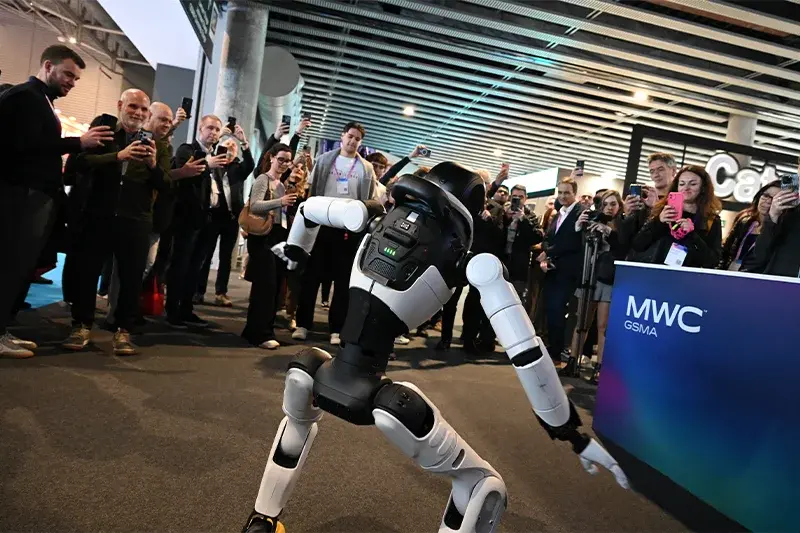
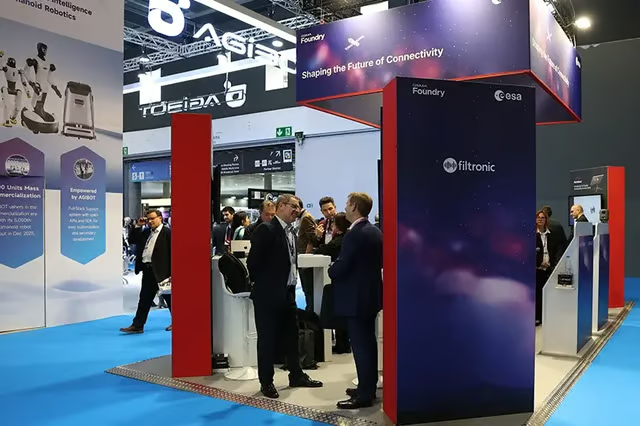
Expanded visual coverage from MWC Barcelona


Coverage timeline
How the story unfolded
Pre-event buildup
Focus on 5G monetization and AI integration in telecom networks.
Opening keynote
Industry leaders emphasized connectivity as the backbone of digital transformation.
Showfloor reaction
High engagement in AI-driven telecom solutions and private network deployments.
Post-event takeaway
Telecom is evolving into a software-driven, AI-powered industry.
Overview
Mobile World Congress 2026 in Barcelona continued its position as the most influential global event for the telecommunications industry. With participation from telecom operators, device manufacturers, infrastructure providers, and policymakers, the event provided a comprehensive view of how connectivity is evolving. The 2026 edition focused heavily on the intersection of AI and telecom, particularly in network optimization, predictive maintenance, and customer experience. Discussions also extended to 5G monetization, private networks for enterprises, and early-stage 6G research. Unlike consumer electronics events, MWC is deeply infrastructure-driven, making it critical for understanding how global connectivity systems are built and scaled.
What Happened On The Ground
Telecom operators showcased advancements in 5G networks, including private 5G deployments for enterprises and industrial use cases. Discussions focused on how operators can monetize infrastructure investments beyond traditional consumer services.
AI integration in telecom networks emerged as a major theme, with vendors demonstrating solutions for network automation, predictive maintenance, and traffic optimization.
Device manufacturers introduced new hardware optimized for 5G and edge computing, highlighting improvements in performance, battery efficiency, and connectivity.
Enterprise participation increased significantly, with industries such as manufacturing, logistics, and healthcare exploring private network deployments.
Why The Event Mattered
MWC 2026 mattered because connectivity is the foundation of all digital technologies, from AI to IoT.
It highlighted the challenges and opportunities in monetizing 5G infrastructure.
The event demonstrated how telecom networks are evolving into intelligent, software-driven systems.
It provided insight into the future of global connectivity, including early discussions around 6G.
Key Announcements
Launch of advanced 5G network solutions for enterprises.
AI-powered telecom network management systems.
Private 5G deployments for industrial use cases.
Collaborations between telecom operators and cloud providers.
New devices optimized for 5G and edge computing.
Early research initiatives into 6G technology.
Expansion of global connectivity infrastructure
Partnerships between telecom and enterprise sectors
Industry Impact
Acceleration of 5G adoption across industries.
Growth of enterprise connectivity solutions.
Increased role of AI in telecom operations.
Expansion of private network deployments.
Strengthening of global telecom infrastructure.
Emergence of new business models for operators
Integration of telecom with cloud ecosystems