AI
LEAP 2026: AI, cloud, and digital economy investments
LEAP 2026 highlighted Saudi Arabia's aggressive push into AI, cloud infrastructure, and digital economy development under Vision 2030.
Coverage brief
LEAP is treated as a sovereign execution checkpoint where billion-dollar investments, hyperscale infrastructure, and national strategies are translated into real deployment pipelines.
Media assets4 images
Video briefs2 videos

Reach
+11.5% ↑1.5M
Audience reached across cross-regional editorial distribution.
Engagement
+9.4% ↑50K
Interactions tied to article depth and multi-market discussion.
Traffic
+10.8% ↑365K
Visits generated across direct, search, and referred traffic.
Regions
+2.9% ↑18
Active market concentration linked to this event footprint.
Photo gallery
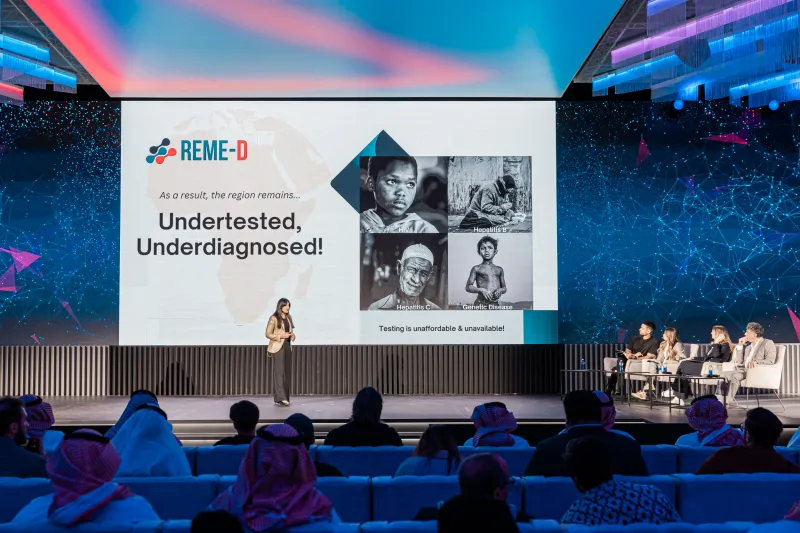
Expanded visual coverage from LEAP


Coverage timeline
How the story unfolded
Pre-event buildup
Significant anticipation around multi-billion dollar AI and cloud investment announcements tied to Vision 2030 initiatives and sovereign fund strategies.
Opening keynote
Government leaders and global CEOs announced large-scale infrastructure projects, setting a tone focused on execution rather than experimentation.
Showfloor reaction
Attendees focused heavily on deployment timelines, cost structures, and integration challenges for AI infrastructure.
Post-event takeaway
Saudi Arabia is transitioning from a technology adopter to a global infrastructure builder.
Overview
LEAP 2026 in Riyadh evolved into one of the most capital-intensive technology gatherings globally, reflecting Saudi Arabia's ambition to reposition itself as a major digital economy hub. The event was defined not by incremental product launches but by large-scale investment announcements across AI compute infrastructure, cloud platforms, and smart city ecosystems. Hyperscalers, telecom operators, and sovereign funds aligned on building localized data infrastructure, ensuring data sovereignty while reducing dependency on external cloud regions. Conversations consistently returned to execution timelines, workforce readiness, and the economic impact of AI adoption across sectors such as healthcare, logistics, and energy. Unlike traditional tech conferences, LEAP operates at a national transformation level, where strategy, capital, and infrastructure are deeply interconnected.
What Happened On The Ground
The showfloor was dominated by large government-backed booths and global enterprise players, with a noticeable shift away from early-stage startup hype toward execution-heavy discussions. Conversations frequently revolved around how quickly announced infrastructure projects could move from planning to operational deployment, especially in the context of hyperscale data centers and AI compute clusters.
Private briefings revealed deeper concerns around integration complexity, supply chain constraints for advanced chips, and the operational costs associated with maintaining large-scale AI infrastructure. Vendors were repeatedly asked to justify not just technical capabilities but also long-term sustainability and ROI.
Startups present at the event increasingly aligned their pitches with national priorities, focusing on sectors such as fintech, healthtech, and smart cities. Investor conversations were less about speculative growth and more about strategic fit within government-backed initiatives.
Workforce and talent development emerged as a major theme, with multiple sessions highlighting the need to build local expertise in AI, cloud engineering, and cybersecurity to support long-term growth.
Why The Event Mattered
LEAP 2026 mattered because it demonstrated how national-level investment can accelerate technology adoption far beyond what private markets alone can achieve. The scale of funding commitments signaled a long-term shift in how emerging markets approach digital transformation.
It also highlighted the increasing importance of data sovereignty, with countries seeking to host and control their own digital infrastructure rather than relying on external cloud regions.
The event provided a clear view into how AI is being integrated into core economic sectors, moving beyond experimental use cases into operational deployment.
From a global perspective, LEAP reinforced the Middle East's growing influence in shaping technology investment flows and infrastructure strategies.
Key Announcements
Multi-billion dollar commitments toward hyperscale AI data centers and cloud regions.
Strategic partnerships between global cloud providers and Saudi government entities.
Expansion of smart city initiatives including NEOM and AI-driven urban infrastructure.
Launch of national AI programs targeting healthcare, logistics, and public services.
New funding mechanisms for startups aligned with Vision 2030 priorities.
Initiatives to develop local semiconductor and AI talent pipelines.
Deployment of advanced 5G and edge computing infrastructure.
Collaborations with global universities for AI research and development.
Digital governance platforms aimed at improving public service delivery.
Industry Impact
Acceleration of AI adoption across public and private sectors in the Middle East.
Increased global investment in regional infrastructure projects.
Strengthening of Saudi Arabia's position as a global tech hub.
Shift toward localized data infrastructure and reduced reliance on external providers.
Growth in startup ecosystems aligned with government initiatives.
Expansion of job opportunities in AI and cloud computing fields.
Increased competition among global cloud providers in the region.
Long-term transformation of economic sectors through digitalization.